By Cooper Wakefield, Refresh Sports Editorial — Last updated May 20, 2026 · 6-minute read
Outdoor water play and screen time move in opposite directions because water gives kids a fast, physical reason to put the tablet down: splash targets, driveway races, pool passes, and a timer they can feel. For many families, 20 to 60 minutes outside beats another show because the activity starts itself.
Quick navigation
- Why does outdoor water play cut screen time without a fight?
- How do you reduce screen time in the summer?
- Why is playing outside better than watching TV?
- How to have fun with water without a pool
- What are some outdoor water activities?
- Frequently Asked Questions
Why does outdoor water play cut screen time without a fight?
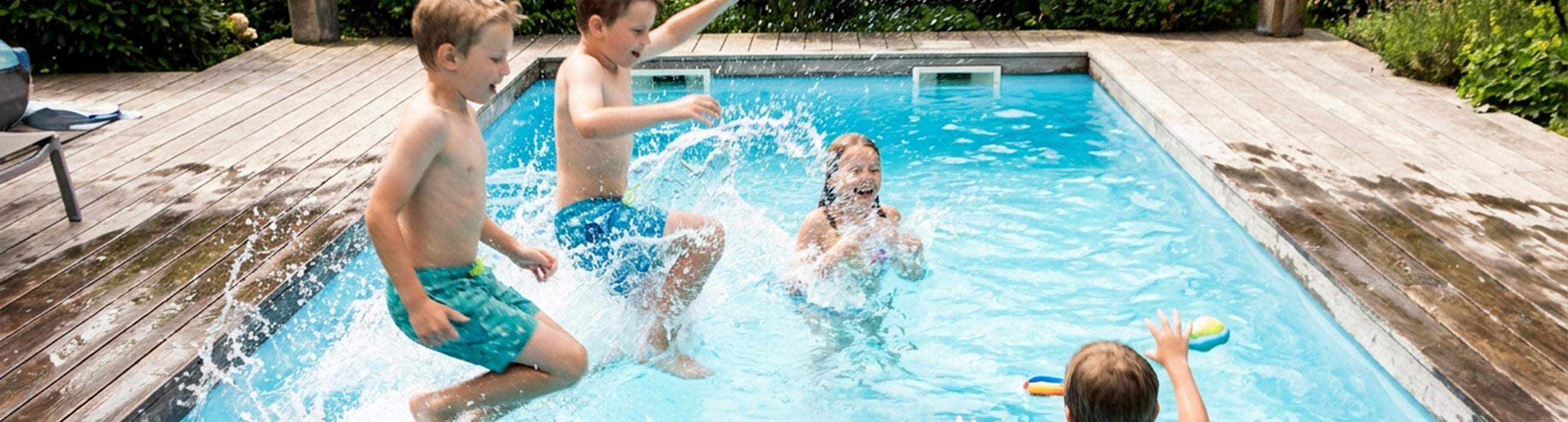
Outdoor water play cuts screen time without a fight because water changes the offer: a screen says sit still and keep watching, while a sprinkler says run through before it swings back. It works because it gives kids motion, temperature, competition, and silliness in the same 10-minute burst, which is exactly what a tired summer afternoon needs.

At our house, the easiest screen break is not a speech. It is a filled bucket, a towel by the back door, and one game already started. If I toss the first disc across the lawn, the younger kid follows. If the older one scores first, the game has a heartbeat.
The American Academy of Pediatrics screen time guidance points families toward building important activities back into the day, including time outside, instead of chasing one perfect screen-time number. That is exactly where water helps. It is hard to passively scroll while someone is counting down a sponge relay.
A toy helps because it gives the first move. The Refresh Sports Aqua Flyer™ Water Splash Discs work well for that 4 p.m. yard reset because they are light, wet, and easy to throw for ages 5 and up. Nobody needs a long rule explanation. Toss, splash, chase, repeat. If you want more low-screen ideas for rainy days and downtime, our guide to engaging screen-free activities for kids pairs well with a summer water plan.
How do you reduce screen time in the summer?
Reduce summer screen time by making the outside plan easier to start than the screen plan: fill the bucket before breakfast, leave towels by the door, set a 25-minute water-play window, and let kids pick the first game. The lower the setup friction, the fewer arguments at 3 p.m.

The summer trap is that screens are always ready. Water play has to compete with that, so I try to make it visible before anyone asks for the remote.
A simple weekday rhythm can look like this:
- Park screens in one spot before breakfast.
- Put water gear near the door, not buried in the garage.
- Start with a 20- to 30-minute outside block.
- Let kids choose between two games, not ten.
- End before everyone is sun-baked and cranky.
That last point matters. If water play always ends with whining, cold feet, and a lost sandal hunt, kids remember the bad finish. I would rather stop at 28 good minutes and leave them wanting another round after dinner.
For a family with kids ages 3 to 12, I like pairing one water toy with one dry backup. The Refresh Sports XL Beach Ball can go from sprinkler volleyball to basement keep-up if thunder rolls in. The Refresh Sports Budget Summer Fun Bundle is handy when cousins show up and one toy is not enough to survive sharing.
Why is playing outside better than watching TV?
Playing outside is better than watching TV when the goal is movement, coordination, problem-solving, and sleep pressure. TV can be calm and useful in small doses, but it does not make a 7-year-old sprint, throw, balance, negotiate turns, or come inside hungry enough to eat real dinner.

The body piece is straightforward. The CDC physical activity guidance for children says kids ages 3 to 5 should be active throughout the day, while ages 6 to 17 need at least 60 minutes of physical activity daily. A backyard water game can chew through a big chunk of that without feeling like exercise.
The social part is just as important. A screen does not care who goes first. A water game does. Kids have to decide where the line is, whether a catch counted, and whether the 10-year-old is taking it easy enough on the 5-year-old. Some of those negotiations are messy. That is fine. The driveway is a better place to practice losing by one point than the living room after bedtime.
Outdoor water play also gives kids sensory variety: cold water, warm pavement, wet grass, bright sun, the sound of a ball smacking into a fence. That mix wakes them up in a way a show rarely does. The goal is not to make TV forbidden. The goal is to make outside feel like the better offer often enough that the habit shifts.
How to have fun with water without a pool
You can have fun with water without a pool by using a sprinkler, hose mist, buckets, sponges, water table, splash mat, driveway chalk, or a shallow bin for floating targets. The point is not depth. The point is repeatable action: toss, fill, pour, chase, jump, and reset.

A pool is great, but plenty of the best summer afternoons happen with a hose and a patch of lawn. For a full yard plan, pair this with our roundup of backyard water toys with no pool needed, then keep one or two games small enough to run before dinner.
Good pool-free setups include:
- Sprinkler limbo with a broom handle or pool noodle.
- Sponge bucket relays across the driveway.
- Splash-disc toss into laundry baskets.
- Water painting on a fence with clean brushes.
- Beach-ball keep-up under a hose mist.
- Skipping practice at a lake or shallow shoreline.
For lake days and beach afternoons, the Refresh Sports Soft Stone Skippers® Water Skip Disc gives kids the stone-skipping motion without hunting for perfect flat rocks. For a lawn game, the Refresh Sports Aqua Zone™ Water Football turns a sprinkler into an end zone pretty quickly.
Water still deserves attention, even when it is not a pool. The American Red Cross water safety basics emphasize close supervision, barriers, life jackets where needed, and swim skills. I empty buckets after play, keep toddlers within arm’s reach near standing water, and save open-water games for places where the adults can actually watch.
What are some outdoor water activities?
Good outdoor water activities are short, repeatable, and easy to score: sprinkler limbo, sponge relays, splash-disc toss, beach-ball keep-up, driveway target practice, and underwater ball passes for swimmers. For ages 3 to 12, the strongest games give kids a job every few seconds, so nobody drifts back inside.
Here are the water games that get the most mileage around our place:
- Sprinkler freeze run: Kids run until the sprinkler swings their way, then freeze before the spray hits.
- Sponge transfer race: Two buckets, one sponge, and 5 minutes on the timer.
- Splash-disc target toss: Set baskets at 6, 10, and 15 feet for different ages.
- Beach-ball shoulder taps: Keep the ball up, but every hit has to come from a different body part.
- Water football end zones: Mark two towel lines and keep the field short for younger kids.
- Underwater passes: In a pool, swimmers pass a sinking ball across the shallow end.
For kids who are comfortable underwater, the Refresh Sports Aqua Dive Ball™ Underwater Pool Ball gives pool play a clear mission: chase it, pass it, score it. If you want several water games in one box, the Refresh Sports Pool Sports Starter Bundle is built for the kind of afternoon where cousins arrive in waves and nobody wants to sit out. You can also browse our full lineup of pool toys and water toys for kids to match a game to your yard.
The trick is rotating games before they go flat. Ten minutes of sponge relays, 10 minutes of target toss, then 10 minutes of free splash time can carry a full half hour. That is often enough to break the screen loop before it digs in.
Frequently Asked Questions
Summer screen questions usually sound practical because the day has real pressure points: breakfast, camp pickup, dinner, bath, and bedtime. These answers keep the rules simple enough to use while someone is wet, someone is hungry, and the towels are somehow already on the floor.
What is the 3 6 9 12 rule for kids?
The 3 6 9 12 rule is a screen-use rule of thumb: no personal screens before age 3, no personal game console before 6, no independent internet before 9, and no unsupervised internet before 12. I treat it as a reminder to delay solo tech and keep shared, active options ready.
What is the 9 minute rule for kids?
The 9 minute rule says three small windows matter a lot: the first 3 minutes after a child wakes up, the first 3 minutes after you reconnect later in the day, and the last 3 minutes before sleep. In summer, that middle window might be camp pickup, dinner prep, or the wet-towel pile by the door.
What can I use instead of a pool?
Use a sprinkler, hose mist, splash pad, water table, buckets, sponges, spray bottles, beach ball, or shallow bin with floating targets. For older kids, add a scoring system. For younger kids, keep the water shallow, keep the game close, and empty containers when play is done.
How to reduce screen time in the summer?
Start with one predictable outside block each day, even if it is only 20 minutes. Put the gear where kids can see it, give them two activity choices, and keep the first game easy. Outdoor water play works best when it feels like the next normal thing, not a punishment for watching TV.